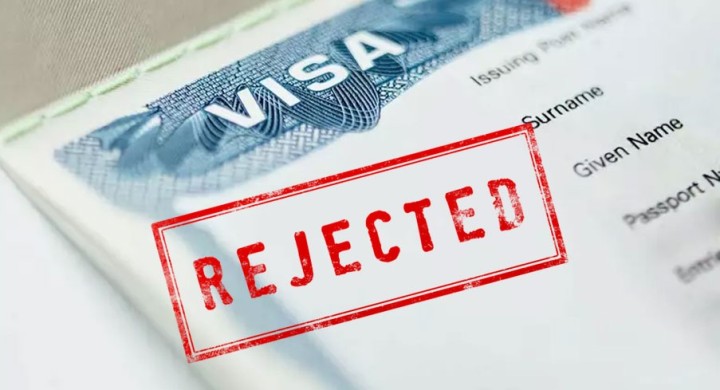
Nepali students seek to study in Western nations including the United States, Canada, the United Kingdom, Australia and Europe. Every year a considerable proportion of them gets rejected on the visa application not out of inability or lack of desire but due to lack of satisfaction with the application requirements of the visa officers. These are some of the main reasons that should be known in order to better prepare future applicants and prevent the mistakes that are expensive.
1. Unclear financial documentation
A weak or ambiguous financial documentation is one of the most common reasons of visa rejection. Embassies are demanding of witnessing solid evidence that students will not have to worry about tuition fees and living costs. In most instances, unexpected huge deposits, borrowed funds, unknown sources of income or bank balances that are not pegged to family earnings are a serious cause of concern. Visa officers tend to doubt the credibility of an applicant whenever he claims to have finances that are unrealistic or not well elaborated.
2. Academic Progression
Poor academic justification is also another significant problem. Visa officers take time to look at how the course taken is compatible with the education history of the student. The alteration in the study field without any explanation, the application to lower degree after getting higher education, or the gaps in studies without any excusable reasons usually causes the officers to feel that the applicant is not really serious in education. There must be an academic progression.
3. Weak SOP and GS
Weak Statement of Purpose (SOP) or Genuine Student (GS) statement can also be considered as a major cause of rejection. Most of the applications fail due to the SOP sounds being copied, generic and too focused on work and establishing oneself in a foreign country instead of studying. The visa officers require a properly written explanation of academic objectives, career objectives and the reasons why a certain country and an institution have been chosen.
4. English language test issues
The level of proficiency of English language is also an important factor. Poor IELTS, PTE, or TOEFL scores, in particular speaking and writing, can cause the officers to question the capacity of a student to handle academic requirements. The global communication skill is also taken seriously even in cases where minimum scores are attained.
5. Incomplete Documentation
Another problem that is prevalent is inconsistent or incomplete documentation. These discrepancies in names, dates, academic history, employment history, or financial information among documents may make a red flag. Even such trivial mistakes can be suggested as misrepresentation, which can have a terrible negative effect on an application.
6. Strong ties to Nepal
Visa officers also determine good connections of students to Nepal. The applicants should demonstrate persuasive cases of why they want to go back home after their studies; family issues, career prospects, and long term plans in Nepal. In case of these connections, which are weak, or obscure, the officers might have the feeling that the student is planning to exceed or permanently migrate.
7. Interview Performances
In the case of such countries as the United States, interview performance might prove decisive. Immediate rejection, even in the case of otherwise strong documents, is caused by nervousness and memorized answers, failure to explain course contents, sources of funding, future intentions clearly.
8. Previous refusals
A record of prior visa denials, overstays, or immigration breaches is very detrimental in subsequent applications, particularly when the existing problems are not revealed and justified.
9. Unqualified education agents
Applying to low-quality institutions or using poorly-qualified education agents has resulted in rejection to many Nepali students. The credibility of colleges and universities is examined all the more so in the Western countries and bad institutional decisions are the red flag.
10. Lack of clarity
The majority of visa rejections are caused by the
insufficient clarity, ineffective documents, and insufficient preparation
instead of the absence of merit. Having guidance, genuine paperwork and an
excellent academic story, the Nepali students can have great chances to get
their visa approved.
To achieve optimal results, it is recommended that
students should find credible counseling, prepare papers and keep on track
using official embassy and immigration websites.